

Preventing Winter Falls: Eight Safety Tips Every Senior Should Know
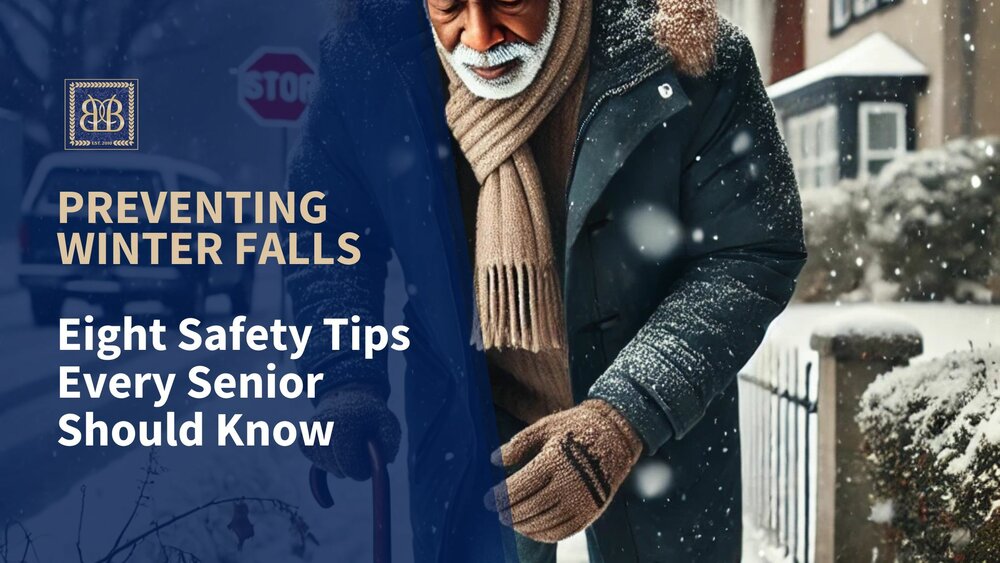
By planning ahead and being mindful of hazards, preventing winter falls can help seniors enjoy the season safely.
While winter can be a beautiful time of the year, it also poses unique safety challenges for older adults. As the temperatures drop and snow accumulates, seniors are at an increased risk of falling on slippery surfaces or experiencing hypothermia. Consider these facts:
- Each year, one in three people aged 65 and older suffer a fall.
- Falls are the leading cause of injury and injury-related death in older adults.
- During winter months, falls are more common among seniors, with icy conditions contributing to a 30% increase in fall-related injuries.
In this article, we have compiled eight helpful fall prevention tips that seniors and their loved ones should know.
1. Gear up for the season.
Invest in warm footwear with good traction, such as shoes or boots with fleece lining and rough-textured soles to prevent slipping. Make sure to have a warm, waterproof coat to shield against the cold and keep your body temperature regulated. Accessories like scarves, hats, and gloves can offer added protection from the cold.
2. Keep driveways and sidewalks clear.
When rain or melted snow freezes, it creates dangerous, slippery surfaces. Compacted snow is also slicker than fresh snow. Pay close attention to walkways and driveways for any ice buildup. Ideally, arrange for family, friends, or neighbors to assist in clearing walkways of snow and ice regularly during the winter months to prevent accidents.
3. Maintain physical activity.
As we age, our gait slows, balance tends to decline, and muscles lose their strength and elasticity. To help prevent falls, maintain regular moderate physical activity levels—including endurance, strength, flexibility and balance exercises—to improve overall health and the ability to walk safely.
4. Eat a well-balanced diet.
Nutrition plays a vital role in winter safety for seniors. Make sure you or your loved one is eating a variety of nutritious foods, including fruits, vegetables, lean proteins, and whole grains. Warm soups, stews, and hot beverages can keep you warm and nourished in chilly weather.
5. Use handrails and assistive devices.
If your stairs or ramps don’t have sturdy handrails, make it a priority to install them for extra support. Handrails can significantly reduce the risk of falling, especially during winter months. In addition to handrails, consider using a cane or walker with a broad base for added stability on slippery surfaces.
6. Get regular eye exams.
Old or ineffective eyeglasses increase the risk of falls and can make it harder to detect icy conditions. Get regular eye exams to ensure your prescription is up to date and your vision is optimized for safely navigating winter hazards.
7. Dress warmly when venturing outdoors.
As we age, the body struggles to retain heat, and hypothermia can set in quickly. Just a few minutes in freezing temperatures can result in dangerous health issues. Make sure to dress in layers and wear insulated clothing when going outdoors. Avoid going to the mailbox in just your robe and slippers—always wear appropriate outdoor clothing, even if you’ll only be outside for minute.
8. Carry a cell phone or medical alert device.
This is a good practice all year long. Keep a phone or safety device on your person at all times. It can literally be a lifesaver in an emergency situation. New devices even offer helpful features like automatic fall detection, GPS tracking, and medication reminders.
It’s essential for older adults to proactively address winter safety concerns and take appropriate steps to avoid accidents and injuries. Following these tips for preventing winter falls can help you enjoy the season with confidence and peace of mind.
Staying healthy is easier when you’re armed with the right information. If you need additional resources about how to prevent winter falls, we are here to help. Please reach out to our caring professionals anytime.
About Batchelor Brothers Funeral Services: As a leading African American-owned and operated funeral and cremation organization, Batchelor Brothers Funeral Services has provided a ministry of care to thousands of grieving families. We promise to provide our highest level of distinguished service and respect to families who entrust us to honor their loved ones. With two convenient locations serving North and West Philadelphia, it is always our pleasure to be of service. For more information about our funeral, cremation, memorial, repast, and grief counseling services, please visit batchelorbrothers.com.
Previous Posts
Who Is Eligible for a Military Funeral? Your Biggest Questions Answered
Personalizing Funeral Services: 10 Do’s and Don’ts for a Meaningful Tribute
Breast Cancer Awareness Month: Why Early Detection Matters More Than Ever
Seasonal Fall Prevention: Top 10 Tips for a Healthier, Happier Autumn
10 Keys to Planning a Comforting Autumn Memorial Service
How to Choose Words of Sympathy That Bring Comfort
Sickle Cell Awareness Month: 10 Things Everyone Should Know
Why Families Choose Batchelor Brothers & Jones for High-Profile Funeral Services
Navigating Legalities After Losing a Loved One: 7 Important Things To Know
Spot the Signs, Save a Life: Recognizing and Responding to Heat Stroke and Heat Exhaustion



Comments