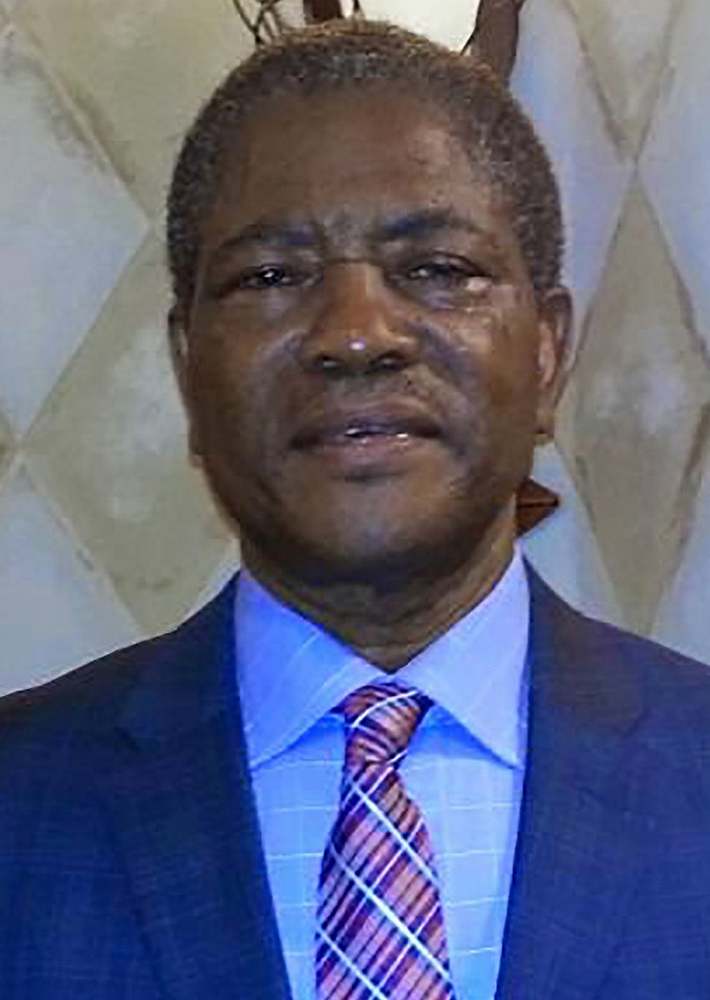
Moses Edward Mikka-Mukasa Obituary

Moses Edward Mikka-Mukasa Obituary

Moses Edward Mikka Mukasa was born on February 4, 1942, to Christopher Muso

and Agnes Nakawombe on the Lake Victoria Island of Koome, Mukono District, in

the Kingdom of Buganda - at the time part of the Uganda Protectorate within the

British Empire in East Africa. Ever curious and eager to learn, he was moved to the

mainland for his early education and subsequently attended Bishop Hannington

Primary School in Mukono.

In 1955 he was accepted, on a government scholarship, into King's College Budo

Junior Secondary School, at that time the most prestigious boy's high school in

Uganda. His academic excellence saw him consistently at the top his class, earning

admiration from both peers and teachers. His extracurricular activities included

singing in the choir, and theatre – where he played leading roles in the school's

Shakespeare productions. Beyond the classroom, Moses' athletic prowess shone

brightly. As a key player in the school's cricket and football teams, he not only secured

victories but also won School Colors in both sports, marking him as a versatile and

talented athlete.

In 1960, he was chosen to be a Prefect for his residence - South Africa House, and in

1961, he rose to the esteemed position of School Head Prefect earning him a personal

gift of a Kanzu from His Majesty Sir Edward Mutesa II, the 35th Kabaka (King) of

Buganda, and future first President of Uganda. This coveted position was a testament

to his ability to lead and inspire others, a skill that would serve him well in the years to

come.

These formative years of Moses Mukasa's life were not only marked by personal

achievements but also by the socio-political changes sweeping through Uganda. The

1960s and 1970s were a time of intense political activity and transformation, with

Uganda gaining independence in 1962, and experiencing significant political turmoil

thereafter. Despite these challenges, Moses' determination and dedication to his

studies and sports illustrated a remarkable resilience and adaptability.

After completing his high school education, Moses continued his academic and

athletic journey at Makerere University, one of Africa's most prestigious institutions.

Here, he kept his passion for cricket alive, playing for the university team and later,

the Uganda National Team. His tenure with the national side came during a period of

significant political upheaval, following the expulsion of Asians from Uganda in 1972.

This era saw Moses and his teammates touring countries in East, Central and West

Africa, where he distinguished himself as the first native African wicketkeeper for the

national team, and as a formidable hard-hitting middle-order batsman.

In 1966, he earned a Bachelor of Arts degree in Economics and Political Studies from

Makerere University in Kampala, Uganda. He furthered his education with a Master

of Arts in Economics, Statistics, and Population Studies from the University of

Michigan, Ann Arbor, USA, in 1968. This strong academic foundation would lead to a

distinguished career in population studies, economics, and international development

that spanned over four decades, leaving a significant mark in those fields.

His professional path was dedicated to public service and international development.

His early career saw him at the Ministry of Finance in Uganda, where he served as an

Economist from 1966 to 1968. This role was followed by a series of increasingly

senior positions at the Ministry of Planning and Economic Development in Uganda,

where he rose from Statistician to Chief Government Statistician. During his tenure as

Chief Government Statistician, he oversaw the country's first post-independence

national census in 1969. Although scientific methodology was used for the first time

during the previous two national censuses, in 1948 and 1959 respectively, both these

censuses were conducted separately for African and non-African populations. The

1969 national census, led by Moses, was the first to be conducted jointly for all races,

using more contemporary units of renumeration including, for the first time,

customized indices, and indicators relevant to indigenous African social, cultural, and

economic life. These models remain in use today. Alongside his work as a civil

servant, Moses contributed to academia as a Part-Time Lecturer at Makerere

University's Institute of Statistics and Applied Economics from 1971 to 1977.

After being exiled from Uganda in 1977, his expertise in population and statistical

analysis led to his involvement with various international organizations. In 1978, he

participated in evaluating the First African Census Program funded by the United

Nations Fund for Population Activities (UNFPA), involving the countries of Burkina

Faso, Madagascar, Sierra Leone, Senegal, Somalia, and Sudan. From 1979 to 1989, he

worked at the International Planned Parenthood Federation (IPPF) where he rose

from the position of a Consultant in Monitoring and Evaluation to a Senior Program

Officer for Eastern and Central Africa, and finally to the Sub-Regional Director for

Eastern and Southern Africa. In these capacities, he was instrumental in managing and

advising family planning associations across Africa and coordinating the

implementation of family planning and reproductive health activities.

Moses's career with the United Nations began in earnest in 1989. He was the United

Nations Fund for Population Activities (UNFPA) Country Director for Zambia from

1989-1994. From 1994 to 1998, he served as the UNFPA Representative for

Botswana. During this time, he concurrently served as the Country Director for

Lesotho and Swaziland. His final appointment was as the UNFPA Representative for Ghana, a role he held from 1998 until his retirement. During his tenure in Ghana, he

also served as the United Nations Resident Coordinator from 1999 to 2001.

Moses's responsibilities in these roles were extensive. His work involved planning and

participating in country population assessments, developing country program

strategies, and negotiating project execution and funding modalities. He advised

governments on integrating population considerations into development planning and

policy and acted as a focal point for population information and expertise. He

established and maintained crucial contacts with government authorities, bilateral aid

programs, and non-governmental organizations. He also provided leadership in

coordinating population assistance with bilateral aid agencies, UN agencies, and

NGOs.

Under his leadership, in Zambia, UNFPA initiated the provision and promotion of

family welfare and HIV/AIDS workplace interventions within the private sector,

government and civil society to help organizations and their employees anticipate and

minimize the impacts of HIV/AIDs. In Botswana, he designed the first national

adolescent reproductive health program aimed at reducing teenage pregnancy and

preventing the spread of HIV/AIDS; he chaired the United Nations Theme Group

on HIV/AIDS; and supervised the implementation of the UNFPA Global Training

Program in Population and Development at the University of Botswana. In Lesotho

and Swaziland, UNFPA designed and introduced the HIV/AIDS playing cards which

creating awareness about the HIV/AIDS pandemic.

Among his key achievements during his tenure in Ghana was taking immediate steps

for engaging Government attention and public actions through high level

Advocacy/awareness, preparedness, and funding support that prompted actions to

catalyze policy measures and institutional frameworks against the spread and impact

of HIV and AIDS; culminating in the strengthening of policy and legislative

processes, funding allocations, institutional strengthening through serious

engagements at different levels of the national leadership (The Executive,

parliamentary, religious and traditional leaders, heads of institutions across many

regions of the country).

He also led gender and development policy interventions that heightened awareness

and actions to promote and protect the rights and wellbeing of women, girls, and

other vulnerable groups such as the aged in the society. Policy initiatives to address

violence against women and girls, including attention to harmful practices (such as

FGM, early marriage and others), maternal and adolescent health, ageing, and

attention to and integration of evidence-based population issues and data/statistics in development planning were key interventions during this time. He was also successful

in lobbying for the creation of a government ministry responsible for promoting

gender and children issues; undertook and accomplished an advocacy campaign that

resulted in the government and cultural leaders abolishing the "Trokosi" systems

which involved the enslavement of young girls in shrines to atone for the wrong

doings of their ancestors; identified the need to assist displaced women running away

from neighboring countries of war and conflict, and as a result initiated, prepared and

launched the distribution of sanitary towels and first aid necessities in refugee camps

for women in labour.

Beyond his professional roles, Moses was deeply involved in various organizations

and commissions. He was Chair of the United Nations Theme Group on HIV/AIDS

in Ghana, a co-founder, and board member of the Centre for African Family Studies

(CAFS) in Nairobi, Kenya. He was also a member of the United Nations Population

Commission and the Conference of African Planners and Statisticians. His

commitment to family planning and population issues was further demonstrated by

his roles within the IPPF, where he served as Treasurer of the Africa Regional

Council and Uganda's Representative to various international commissions and

conferences. He was a life member of Family Planning Association of Uganda, as well

as a member of various organizations dedicated to ending poverty, injustice,

inequality, and health disparities.

In his spare time, he was an avid stamp collector, a voracious reader and storyteller, a

Tennis fan, and an ardent supporter of Manchester United, Ghana's Black Stars

Football Team, the Philadelphia Eagles, and the West Indies Cricket Team.

Post retirement, he continued to share his vast knowledge and expertise, volunteering

and working part-time as an AmeriCorps volunteer and Prevention Specialist for The

Philadelphia Aids Consortium.

Moses' contributions to published works in his field included publications on the

post-independence East African censuses and innovative approaches to population

and family planning programs. His work has been cited in significant publications,

including the seminal "Population Growth and Economic Development in Africa,"

published by Heinemann in 1972.

A lifelong and fervent Pan Africanist, his was a life and career marked by a profound

dedication to improving population health and economic development across Africa

and beyond. His legacy continues to influence the fields of population studies and international development, reflecting a life committed to service, education, and

Africa's development.

Moses Mukasa passed away on June 13, 2024, at the University of Pennsylvania

Presbyterian Medical Center in Philadelphia, PA, after a long illness. He is survived

by his wife Sarah; his children Primrose Nakawula, Paulo Gavva Mukasa, Aldrine

Nsubuga, Joyce Nantagya, Solome Mukasa, Christopher Mukasa, Livingstone Mukasa,

Agnes Mukasa; his sister Edith Nakawula; his grandchildren Fiona Namugga, Bena

Nakibirige, Frank Kalule, Dodoviko Kalule, Hilda Namutebi, Jackie Namutebi, Jessica

Namayanja, Joshua Mubiru, Joseline Nakawula, Anfield Nsubuga, Aldrine Nsubuga Jr,

Alden Nsubuga, Alma Nsubuga, Ithel Nsubuga; and great grandchildren Aldrine

Aheebwa, Atarah Nalunkuma.

To send flowers to the family or plant a tree in memory of Moses, please visit our floral store.

Moses Edward Mikka Mukasa was born on February 4, 1942, to Christopher Muso

and Agnes Nakawombe on the Lake Victoria Island of Koome, Mukono District, in

the Kingdom of Buganda - at the time part of the Uganda Protectorate within the

British Empire in East Africa. Ever curious and eager to learn, he was moved to the

mainl

Events

Visitation at Main Service

Saturday, July 13, 2024

11:00 am

St. Paul Episcopal

7809 Old York Road Elkins Park, PA 19027

Funeral Service

Saturday, July 13, 2024

11:00 am

St. Paul Episcopal

7809 Old York Road Elkins Park, PA 19027

© 2026 Batchelor Brothers Funeral Services. All rights reserved.|Terms of Use|Privacy Policy|Family Login